

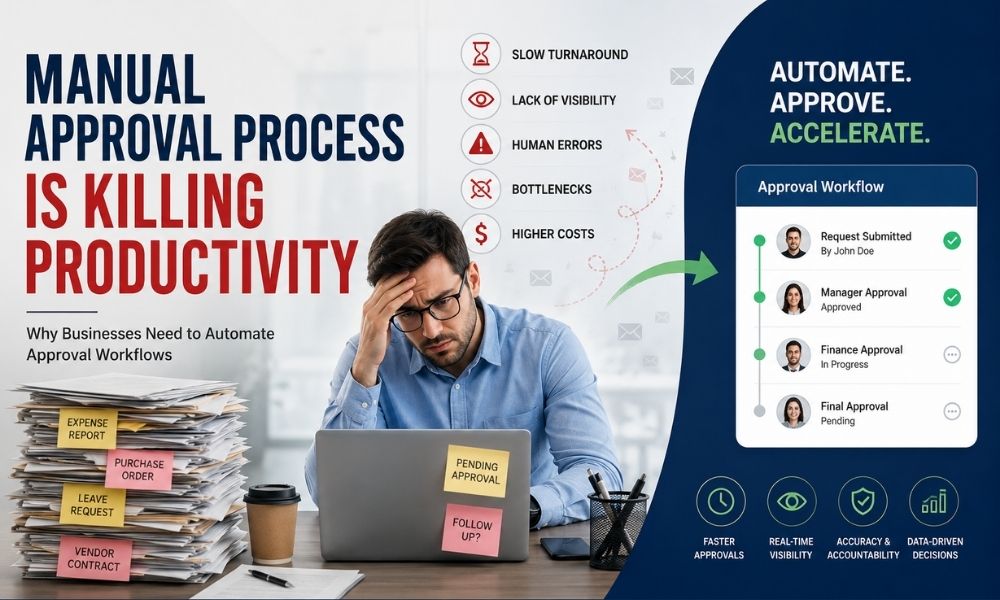
In an era where automation and digital transformation are reshaping how businesses operate, many organizations are still stuck relying on manual approval processes. Whether it’s approving expense reports, purchase orders, leave requests, vendor contracts, or project sign-offs, manual approvals continue to be a hidden productivity killer in countless workplaces.
While these processes may seem harmless on the surface, especially in smaller teams, they gradually create bottlenecks that slow down decision-making, frustrate employees, and hurt overall business performance. Let’s take a closer look at how manual approval processes are killing productivity and why businesses need to rethink their approach.
1. Slow Turnaround Times
Manual approvals typically involve paperwork, emails, or physical sign-offs that depend on the availability of the approver. If a manager is on leave, traveling, or simply buried in other tasks, approvals can sit pending for days or even weeks.
This delay creates a ripple effect across the organization. Projects stall, purchases get delayed, employees wait longer for reimbursements, and business operations slow down simply because a single approval is stuck in someone’s inbox.
2. Lack of Visibility and Tracking
One of the biggest challenges with manual approval systems is the lack of transparency. Employees often have no way of knowing where their request stands in the approval chain. Is it still with the manager? Has it moved to finance? Was it rejected and no one informed them?
This lack of visibility leads to constant follow-ups, repeated emails, and wasted time chasing status updates instead of focusing on actual work. It also makes it difficult for leadership to identify where bottlenecks are occurring within the organization.
3. Increased Risk of Human Error
Manual processes are inherently prone to mistakes. Approvals can be misplaced, emails can be missed, physical documents can be lost, and requests can be approved without proper verification. These errors not only slow down operations but can also lead to compliance issues, incorrect payments, or unauthorized approvals.
As the volume of requests grows, the likelihood of these errors increases, making it harder to maintain accuracy and accountability across departments.
4. Poor Employee Experience
Employees who have to navigate lengthy, unclear approval processes often feel frustrated and demotivated. Constantly following up on pending requests, resubmitting lost documents, or waiting indefinitely for a response creates unnecessary friction in day-to-day work.
Over time, this can affect morale and engagement, especially when employees feel their time is being wasted on administrative back-and-forth rather than meaningful work.
5. Bottlenecks in Decision-Making
In fast-moving business environments, timely decisions are critical. Manual approval processes create single points of failure where an entire workflow depends on one person acting quickly. If that person is unavailable or overwhelmed, the entire process comes to a halt.
This is particularly damaging for time-sensitive matters such as vendor negotiations, urgent purchases, or project approvals, where delays can result in missed opportunities or increased costs.
6. Difficulty Scaling Operations
As businesses grow, the volume of approvals required increases significantly. What may have worked for a small team with a handful of requests per week quickly becomes unmanageable when hundreds of requests need approval across multiple departments.
Manual systems simply cannot scale efficiently. Without automation, businesses end up hiring additional staff just to manage approvals, adding unnecessary overhead instead of investing in growth-focused initiatives.
7. Lack of Data for Better Decision-Making
Manual approval processes rarely generate useful data. Without a digital trail, it becomes difficult to analyze approval times, identify recurring bottlenecks, or understand which departments are experiencing the most delays.
This lack of data prevents businesses from making informed improvements to their workflows, leaving inefficiencies unaddressed for far longer than necessary.
8. Increased Operational Costs
Time is money, and every hour spent chasing approvals, correcting errors, or managing paperwork adds to operational costs. Beyond the direct costs, delayed approvals can also result in late payments, missed discounts, penalty charges, or lost business opportunities.
Over time, these hidden costs accumulate and directly impact the bottom line, making manual approval processes far more expensive than they initially appear.
The Solution: Automating Approval Workflows
The good news is that these challenges can be solved through automated approval workflows. By digitizing approval processes, businesses can enable real-time tracking, automatic notifications, multi-level approvals, and instant escalation when requests are delayed.
Automation not only speeds up decision-making but also improves accuracy, accountability, and transparency across the organization. Employees no longer have to chase approvals manually, managers can approve requests from anywhere, and leadership gains valuable insights into workflow efficiency.
Implementing the right approval management system requires careful planning and the right technology partner who understands your unique business processes.
Conclusion
Manual approval processes may seem like a minor administrative task, but their impact on productivity, employee satisfaction, and operational efficiency is significant. Slow turnaround times, lack of visibility, human errors, and scaling challenges all contribute to a workflow that holds businesses back from reaching their full potential.
By transitioning to automated, digital approval systems, businesses can eliminate bottlenecks, improve accountability, and free up valuable time for employees to focus on work that truly matters.
If your organization is still struggling with slow, manual approval processes, it’s time to invest in a smarter solution. Techffofils, the best software development company in Calicut, specializes in building custom workflow automation and approval management systems that help businesses eliminate inefficiencies and boost productivity across every department.