
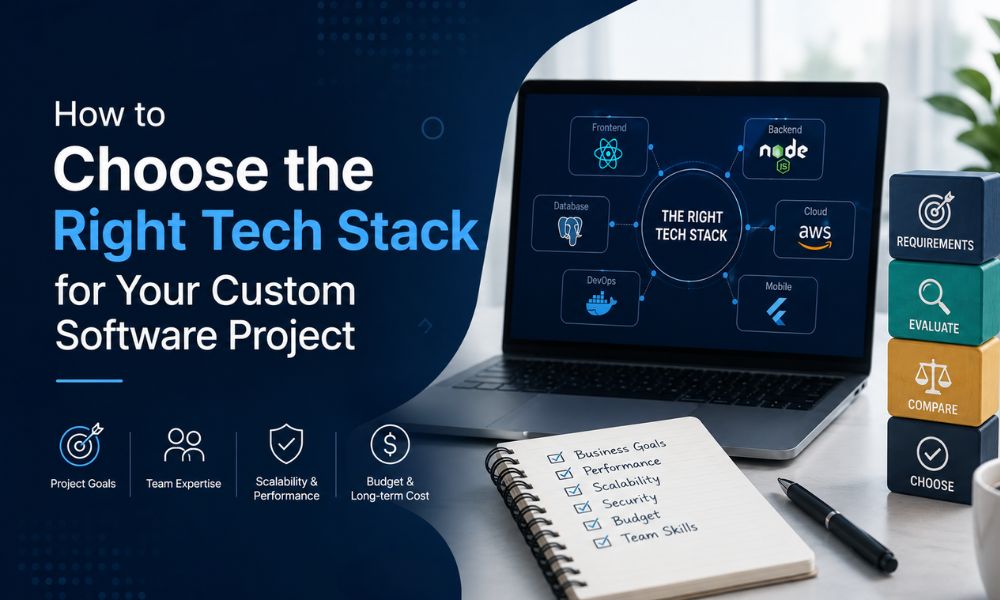
Choosing the right tech stack for a custom software project can feel confusing, especially with so many technologies available today. But the truth is, the tech stack you choose plays a huge role in how your software performs, scales, and survives in the long run. Whether you’re building a startup app, an eCommerce platform, a CRM, or enterprise software, the technologies behind it matter more than most businesses realize.
A tech stack simply means the combination of tools, programming languages, frameworks, databases, and technologies used to build and run your application. The right combination helps your software run smoothly, stay secure, and grow with your business. On the other hand, choosing the wrong stack can lead to slow performance, security issues, and expensive redevelopment later.
In this blog, let’s look at the important things you should consider before selecting a tech stack for your custom software project.
Start with Your Project Requirements
Before choosing any technology, you need to understand what your project actually needs. Every software project is different, so there’s no single “best” tech stack for everyone.
Ask yourself a few important questions:
- What problem is the software solving?
- Who will use the application?
- Is it a web app, mobile app, or both?
- Will the app need real-time features?
- How many users are expected in the future? ● Will it require third-party integrations?
For example, a real-time chat or live tracking application may need technologies like Node.js and WebSockets. Meanwhile, a large enterprise management system might work better with Java or .NET frameworks.
The clearer your goals are, the easier it becomes to select technologies that match your business needs.
Think About Scalability
Scalability is one of the biggest factors businesses should consider. Your software should be able to handle growth without breaking down or becoming slow.
As your business expands, your application may need to support:
- More users ● More traffic
- Larger databases
- Additional features
A scalable tech stack makes future growth much easier and more affordable.
Cloud platforms like AWS, Google Cloud, and Microsoft Azure are popular because they allow businesses to scale applications efficiently. Technologies such as Node.js, Python, and microservices architecture are also commonly used for scalable applications.
Ignoring scalability at the beginning can create major problems later when your user base increases.
Performance Matters
Nobody likes a slow application. Users expect websites and apps to load quickly and work smoothly. Poor performance often leads to frustrated users and lost customers.
When selecting a tech stack, focus on technologies that provide:
- Fast loading speed
- Smooth user experience
- Efficient database handling
- Stable server performance
Frontend technologies like React and Vue.js are popular because they create fast and responsive interfaces. Backend technologies such as Golang and Node.js are widely known for handling performance-heavy applications efficiently.
Good performance is not just about speed, it also improves customer satisfaction and business credibility.
Consider Development Time and Budget
Every project has deadlines and budget limits. Some technologies allow developers to build applications faster because they offer ready-made libraries, tools, and frameworks.
For example:
- Laravel speeds up PHP web development
- React simplifies frontend development
- Flutter helps build Android and iOS apps together
Choosing technologies with strong ecosystems can reduce development time and save money.
However, businesses should avoid choosing technologies only because they are cheaper. A low-cost solution that lacks scalability or security can become much more expensive in the future.
Security Should Never Be Ignored
Cybersecurity is more important than ever today. Your software may store customer information, payment details, or business data, so security should always be a priority.
Look for technologies that offer:
- Regular security updates
- Secure authentication systems
- Data encryption
- Protection against common cyber threats
Frameworks like Django, Laravel, and ASP.NET include built-in security features that help developers create secure applications more efficiently.
A secure tech stack helps protect both your business and your users.
Check Community Support
A technology with a strong developer community is usually easier to maintain and update. Large communities provide:
- Better documentation
- Faster bug fixes
- More plugins and integrations
- Easier developer hiring
Popular technologies like React, Angular, Python, and Node.js have massive global communities supporting them.
Using outdated or unpopular technologies can make future maintenance difficult because finding experienced developers may become challenging.
Choosing Frontend Technologies
Frontend development focuses on what users see and interact with directly. A good frontend creates a smooth and engaging user experience.
Popular frontend technologies include:
- React.js
- Angular
- Vue.js
- HTML5
- CSS3
- JavaScript
React is highly popular for modern web applications because it is flexible and fast. Angular is often preferred for large enterprise-level applications, while Vue.js is loved for its simplicity.
The right frontend stack should provide:
- Responsive design ● Easy navigation
- Fast loading pages
- Great user experience
Selecting Backend Technologies
Backend development handles server-side operations, APIs, databases, and business logic.
Popular backend technologies include:
- Node.js
- Python
- PHP
- Java
- .NET
- Ruby on Rails
Node.js works well for real-time applications, while Python is often used for AI, automation, and data-heavy projects. PHP frameworks like Laravel continue to be popular for business websites and portals.
A strong backend ensures:
- Stable performance
- Smooth integrations
- Better security
- Scalability
Choosing the Right Database
Databases are another important part of your tech stack. The choice usually depends on how your application handles data.
SQL Databases
Examples include:
- MySQL
- PostgreSQL
- Microsoft SQL Server
Best suited for:
- Structured data
- Financial systems
- Complex queries NoSQL Databases
Examples include:
- MongoDB
- Firebase
- Cassandra
Best suited for:
- Large-scale applications
- Real-time systems
- Flexible data structures
The database should match your project’s performance and scalability requirements.
Think About Future Maintenance
Software projects continue evolving even after launch. Updates, bug fixes, and new features are part of long-term software management.
That’s why it’s important to choose technologies that:
- Are easy to maintain
- Receive regular updates
- Have long-term support
- Allow easy modifications
Modern and widely adopted technologies usually make maintenance much easier.
Cross-Platform Compatibility
If your application needs to run on both Android and iOS, cross-platform development can save time and money.
Frameworks like:
- Flutter
- React Native
- Xamarin
allow developers to create apps for multiple platforms using a single codebase.
This approach is especially useful for startups and businesses working with limited budgets.
Work with an Experienced Development Team
Even the best tech stack can fail if it’s implemented incorrectly. An experienced software development team can help you choose the right technologies based on your business goals and technical requirements.
Professional developers can:
- Analyze your project properly
- Suggest the best technologies
- Improve application performance
- Ensure scalability and security
- Reduce technical risks
The right team can save both time and money while helping you avoid costly mistakes.
Final Thoughts
Choosing the right tech stack for your custom software project is not just a technical decision , it’s a business decision. The technologies you choose will affect your software’s speed, scalability, security, maintenance, and overall success.
There’s no one-size-fits-all solution when it comes to tech stacks. The best choice depends entirely on your project goals, budget, target audience, and future plans. By carefully evaluating your requirements and working with experienced developers, you can build software that is reliable, scalable, and future-ready.
If you’re looking for expert custom software development services, Techffodils can help you build scalable and high-performing software solutions tailored to your business needs.